28 Jun 2026
Demographic shifts in virtual wheel communities reshaping tailored spinning incentive frameworks across emerging digital platforms
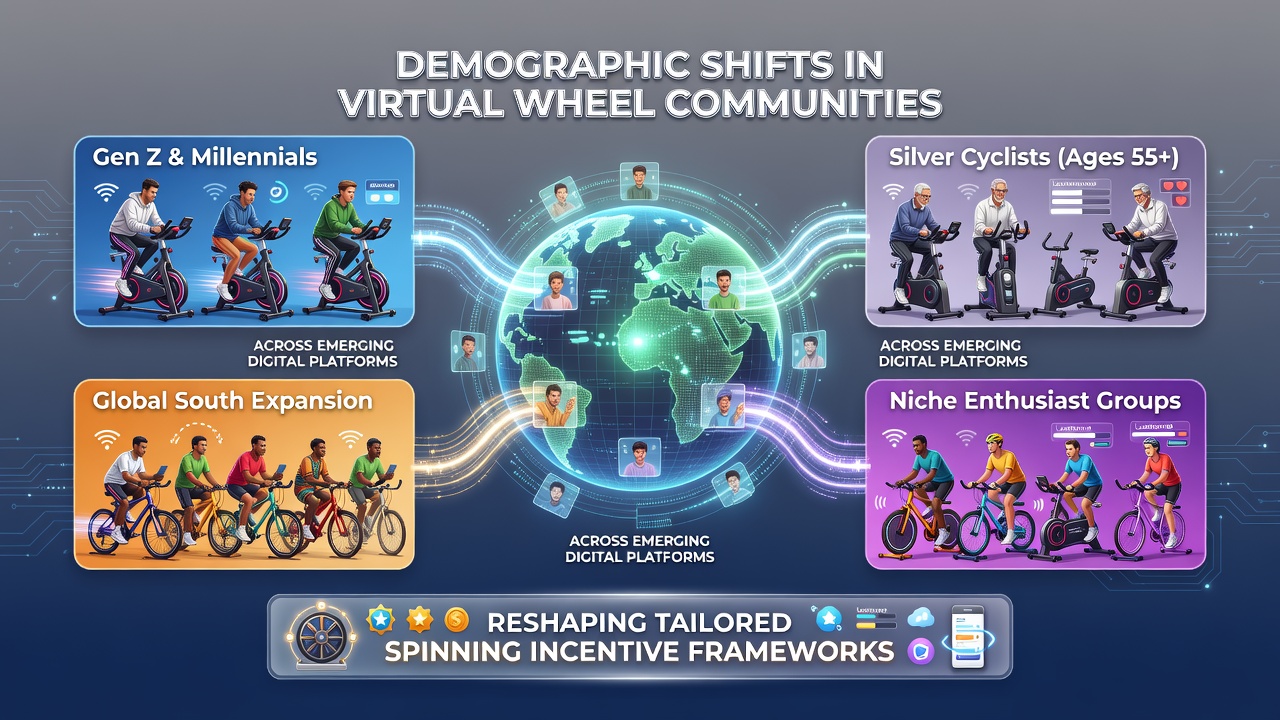
Virtual wheel communities have undergone notable transformations in recent years as player demographics evolve across age groups, geographic regions, and engagement patterns, and these changes directly influence how emerging digital platforms structure their spinning incentive frameworks. Research indicates that participation rates among users aged 25 to 40 have increased steadily while older cohorts maintain steady involvement, prompting operators to adjust reward mechanisms accordingly.
Player profile transformations drive framework adjustments
Observers note that virtual wheel environments now attract a broader mix of participants from North America, Europe, and Asia-Pacific markets, with data showing higher proportions of mobile-first users who favor quick session formats over extended play. This distribution shift leads platforms to redesign incentive layers around shorter spin cycles and instant credit redemptions rather than traditional loyalty ladders. According to figures released by the Ontario iGaming Corporation in early 2026, mobile roulette sessions accounted for over 60 percent of total wheel activity, and platforms responded by introducing location-based reward triggers tied to regional time zones.
Gender participation ratios have also moved closer to parity in several jurisdictions, and this balance encourages developers to incorporate varied incentive types that appeal across different preference profiles. Platforms track session frequency alongside deposit patterns to deliver customized spinning offers that align with these evolving user bases, and analysts report measurable uptake differences when incentives match demographic clusters instead of applying uniform structures.
Regional data patterns inform incentive customization
Emerging platforms in regulated markets have begun integrating cross-border player data to refine their spinning reward systems, and reports from the Australian Communications and Media Authority highlight how localized regulatory requirements interact with demographic trends to shape offer availability. Younger participant groups in these markets demonstrate stronger responses to time-limited spin multipliers while established players show preferences for cumulative cashback mechanisms tied to volume thresholds.
Platforms operating across multiple jurisdictions collect behavioral metrics that reveal distinct patterns in how different age segments interact with wheel variants, and these insights feed directly into automated incentive delivery engines. One study from the International Center for Responsible Gaming examined participation logs and found correlations between demographic segments and preferred reward redemption speeds, leading operators to segment their frameworks accordingly.

Platform responses to shifting community compositions
Operators have implemented modular incentive architectures that allow rapid reconfiguration based on incoming demographic signals, and this flexibility proves essential on newer digital platforms entering competitive spaces. Data from June 2026 indicates that platforms incorporating real-time demographic segmentation achieved higher retention metrics compared with those relying on static frameworks, though exact figures vary by market maturity.
Virtual communities centered around specific wheel formats now reflect broader cultural influences, and platforms adjust spinning promotions to accommodate these community norms without disrupting core reward mechanics. Those who've monitored these environments observe that incentive frameworks increasingly rely on predictive modeling to anticipate shifts in player composition, particularly as new platforms launch in previously underserved regions.
Future trajectories for incentive frameworks
Continued monitoring of demographic indicators suggests that emerging platforms will further refine their spinning incentive delivery through enhanced data integration across user cohorts, and industry reports point to growing emphasis on cross-platform compatibility for reward accumulation. The European Gaming Association has documented how these adaptations support sustained engagement as participant profiles continue diversifying.
Conclusion
Demographic shifts within virtual wheel communities continue to prompt measurable changes in how emerging digital platforms construct and deploy tailored spinning incentive frameworks, with data patterns guiding segmentation strategies across regulated markets. These developments reflect ongoing adaptation to participant diversity while maintaining compliance with regional requirements.