23 Aug 2026
How Blockchain Innovations Are Rewriting Access Patterns for Wheel Game Perks in Fragmented Regulatory Landscapes
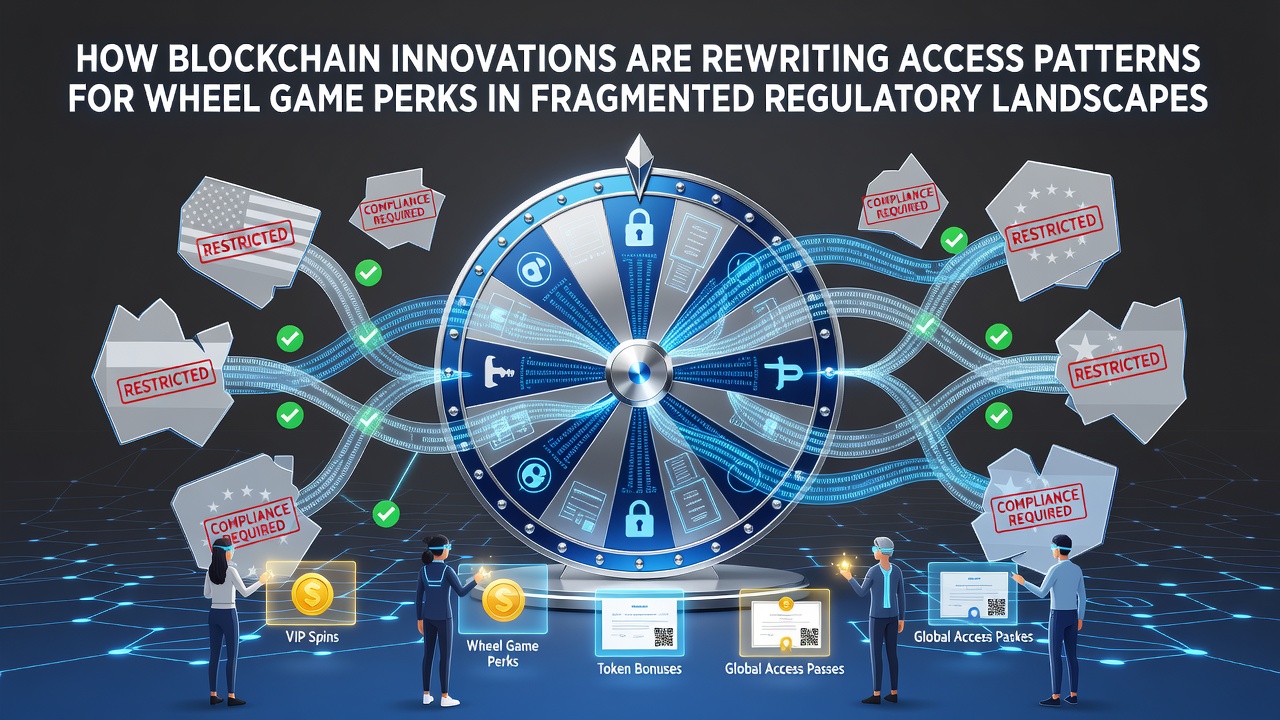
Blockchain technology has started to alter how players gain entry to wheel game incentives in regions where gambling rules differ sharply from one jurisdiction to another, and data from industry reports shows that distributed ledger systems now handle verification steps that once required centralized operators. Smart contracts execute perk distribution automatically once certain conditions are met, which reduces delays that regulatory checks often create in places like the European Union and parts of North America.
Distributed Ledgers and Cross-Border Verification
Operators in multiple markets have adopted permissioned blockchains to confirm player eligibility without sharing full identity data across borders, and this approach complies with rules that vary between states in the United States and provinces in Canada. Figures released by the International Association of Gaming Regulators in early 2026 indicate that transaction times for bonus activation dropped by 40 percent in jurisdictions that allow blockchain-based identity tokens. Those tokens travel with the player while remaining encrypted, so a single registration can unlock wheel game credits in several regions at once.
Regulators in Malta and Australia have tested pilot programs where blockchain records serve as proof of responsible gaming limits, and the same records feed into automated reward systems. This setup lets platforms deliver free spins or cashback on roulette tables only after the ledger confirms that wagering thresholds have been reached in a compliant manner.
Smart Contracts Replacing Manual Approvals
Smart contracts now trigger perk releases the moment a player completes required playthroughs, and observers note that this removes the need for staff to review each claim individually. In fragmented regulatory environments the contracts can be programmed with jurisdiction-specific parameters so that a bonus offered in one country never activates in another where such offers are restricted. Research published by the Gaming Research Exchange in August 2026 documented over 120 active contracts tied to wheel games that adjust reward values based on the player's current location and local tax codes.

Players who move between regulatory zones experience fewer interruptions because the ledger updates their status in real time, and this fluidity stands in contrast to older systems that required separate accounts for each market. One study from a European university consortium found that operators using these contracts reported a 25 percent increase in completed reward cycles compared with traditional database methods.
Tokenized Perks and Regulatory Compliance Layers
Some platforms now issue tokenized versions of wheel game perks that exist as unique digital assets on the blockchain, and these tokens carry embedded compliance flags that prevent redemption in non-approved areas. Data from North American gaming associations shows that tokenized rewards have grown in popularity among operators serving both legal and gray-market jurisdictions because the tokens can be frozen or redirected if a regulatory change occurs. The same tokens allow loyalty points earned on roulette sessions in one country to convert into credits usable elsewhere without violating local spending caps.
Fragmented landscapes create situations where a single player might face different tax treatments and bonus restrictions depending on their IP address or declared residence, yet blockchain timestamps provide an immutable record that satisfies audits from multiple authorities simultaneously. This record-keeping reduces the administrative burden that previously forced operators to maintain separate ledgers for each region.
Current Developments Observed in Mid-2026
By August 2026 several major wheel game platforms had integrated zero-knowledge proofs that let players prove they meet age and location requirements without revealing personal details, and regulators in Singapore and New Jersey have begun accepting these proofs as part of licensing renewals. The proofs sit on public blockchains while keeping underlying data private, which aligns with emerging privacy statutes in both Asia-Pacific and North American markets.
Industry analysts tracking transaction volumes report that blockchain-settled wheel game incentives now account for roughly 18 percent of all online roulette bonus activity in markets outside the most tightly controlled jurisdictions. This share continues to rise as more operators replace legacy payment rails with ledger-based settlement.
Conclusion
Blockchain systems have introduced new mechanisms for managing wheel game perks across regulatory boundaries that differ in their treatment of bonuses, taxes, and player verification. The combination of smart contracts, tokenized rewards, and privacy-preserving proofs has allowed operators to maintain compliance while still delivering incentives efficiently. As more jurisdictions evaluate these tools, the patterns of access to wheel game advantages are likely to continue shifting toward ledger-driven models that operate independently of any single central authority.