30 Jun 2026
How Time Zone Variations Shape the Distribution of Initial Enrollment Incentives in Global Digital Spinning Venues
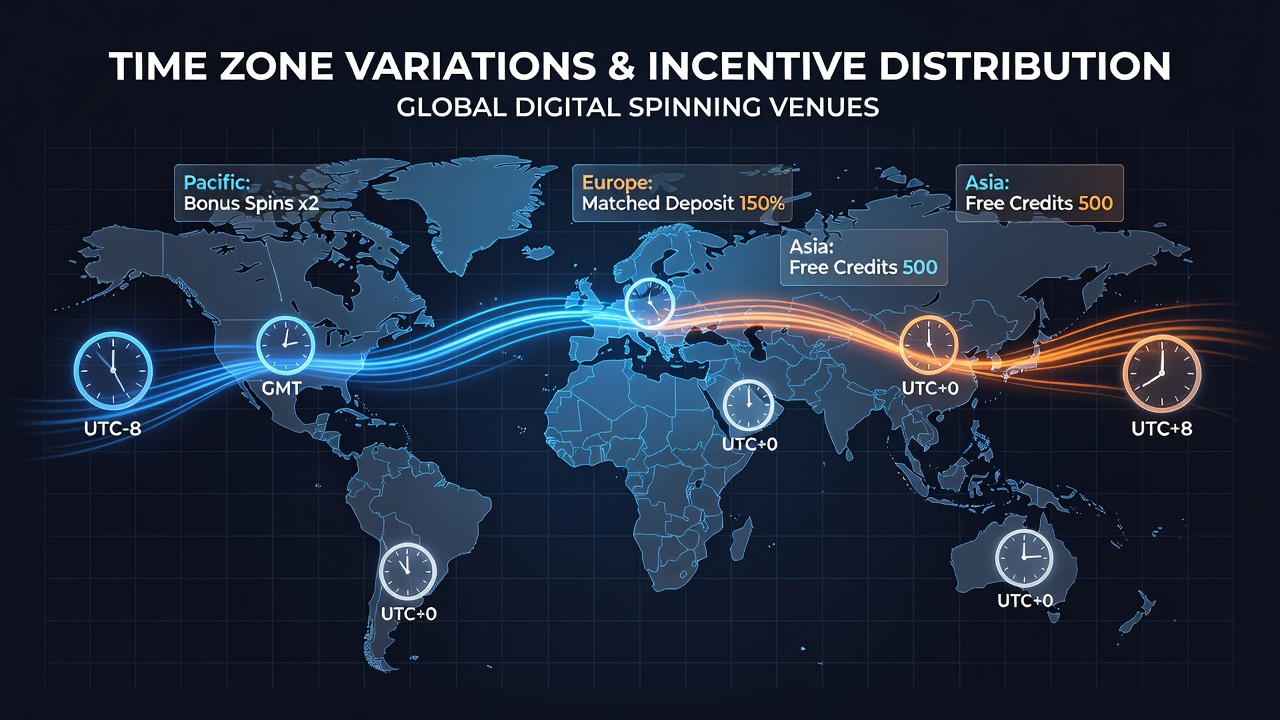
Time zone differences create distinct patterns in how initial enrollment incentives reach players at digital spinning venues worldwide, and operators adjust offer timing based on these geographic realities. Digital spinning venues operate across multiple continents where peak activity hours rarely align, so welcome bonuses, no-deposit credits, and first-deposit matches appear at different moments depending on server location and player residence. Data from platform analytics shows that enrollment windows often open during evening hours in dominant player regions, which means incentives targeted at European users launch several hours before those aimed at North American audiences.
Regional Timing Patterns in Incentive Delivery
Operators maintain multiple regional servers to synchronize promotions with local clock times, yet the underlying distribution logic still follows universal time zone rules. When a venue launches a no-deposit enrollment offer, the release frequently coincides with the start of evening play periods in Asia-Pacific markets first, followed by staggered releases for European and then American time zones. Figures from industry tracking services reveal that June 2026 saw a measurable increase in multi-phase rollouts, where the same incentive package became available in three separate waves spaced roughly eight hours apart. This approach allows platforms to capture first-logins during each major market's active window without overloading single server clusters.
Those who monitor player registration logs note that conversion rates for initial enrollment incentives rise when offers activate within two hours of a region's typical login peak. Venues serving Australian and New Zealand players often schedule releases around 8 PM local time, while the same promotion reaches Canadian and U.S. East Coast users closer to 7 PM their time. The staggered method reduces server strain and aligns bonus visibility with moments when users are most likely to complete registration steps.
Server Architecture and Global Synchronization
Many digital spinning venues rely on cloud infrastructure distributed across data centers in Singapore, Frankfurt, and Virginia, which creates natural offsets in how quickly enrollment systems respond to time-based triggers. When a promotion engine activates an incentive at UTC midnight, players in UTC+8 receive it during their morning hours while those in UTC-5 see it the previous evening. Observers at analytics firms have documented that this offset produces measurable differences in claim velocity, with Asian markets often exhausting limited-offer pools before American users even receive notification.
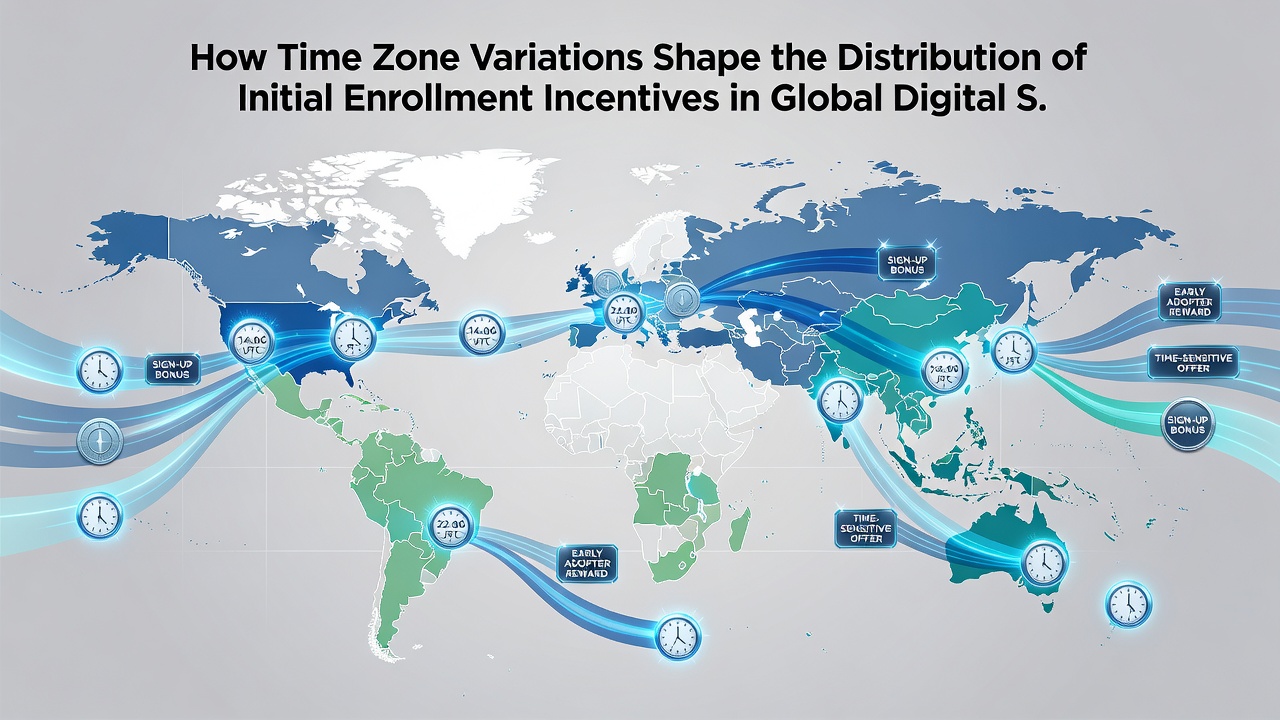
Research from the American Gaming Association indicates that venues using UTC-based scheduling systems achieve more consistent enrollment numbers across hemispheres compared with single-time-zone platforms. The same study found that operators who manually adjust release times for each major market reported higher average deposit values within the first 24 hours of an incentive going live. These adjustments account for daylight saving changes, which shift effective time differences twice each year and require periodic recalibration of promotional calendars.
Regulatory and Market Influences on Timing
Regulatory frameworks in various jurisdictions add another layer to how time zones affect incentive distribution. Platforms licensed in Ontario must comply with provincial rules that tie bonus availability to local timestamps, which sometimes conflicts with global UTC schedules used by the same operator's other markets. Similar requirements appear in several Australian states, where promotional content must display correct local expiry times. Data compiled by the Responsible Gambling Council shows that mismatched timestamps have led to temporary pauses in cross-border incentive campaigns until operators implement automated time-zone detection.
June 2026 brought additional complexity when several major venues synchronized their systems with updated daylight-saving schedules across North America and Europe simultaneously. The coordinated update produced a brief window where enrollment incentives reached players in overlapping time zones at nearly identical moments, resulting in faster uptake in shared markets such as the Caribbean and parts of South America.
Player Behavior Across Time Boundaries
Behavioral data collected by cross-border platform operators reveals that users frequently create accounts during travel or while accessing content from secondary time zones. When a player registers from a location several hours ahead or behind their usual residence, the system may deliver an incentive calibrated for the detected IP address rather than the account's primary market. This mismatch sometimes produces higher claim rates because the offer arrives during the user's actual active period rather than their home time zone's typical window.
Industry reports from European Gaming and Betting Association members highlight that venues tracking both registered address and current IP address achieve more precise delivery of initial enrollment incentives. The dual-tracking method reduces instances where bonuses expire before players in distant time zones notice the notification. Those who have examined registration patterns over multiple years note that mobile users crossing time zones mid-session generate distinct spikes in late-night or early-morning enrollments that desktop traffic rarely matches.
Conclusion
Time zone variations continue to dictate both the scheduling and the uptake of initial enrollment incentives at global digital spinning venues. Operators that map server releases to major market peaks, incorporate regulatory timestamp rules, and account for daylight-saving shifts maintain steadier enrollment volumes throughout the year. The patterns observed through mid-2026 demonstrate that precise timing remains a core operational factor in how these incentives reach players across continents.